


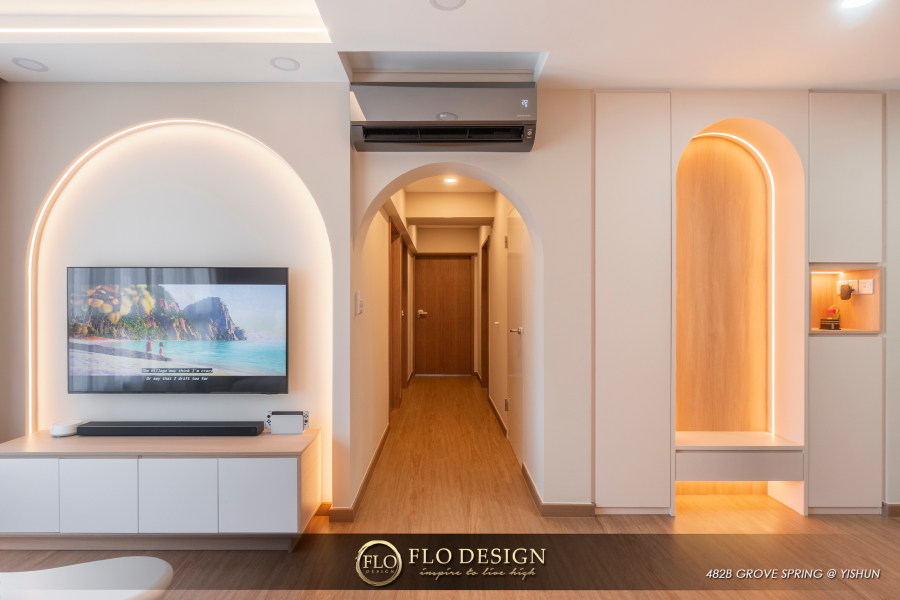
Achieving balance in your home can feel like walking a tightrope. Too many bold choices create chaos, while too much subtlety risks a bland, uninspired space. Interior designers often rely on the 70/30 rule to maintain harmony, ensuring that every room looks cohesive yet visually exciting. Understanding this simple ratio can make all the difference.
Understanding The 70/30 Rule
The 70/30 rule is a guiding principle in interior design that dictates the distribution of colours, patterns, and textures within a space. Essentially, 70% of your room should consist of a dominant, neutral base, such as walls, floors, or large pieces of furniture. The remaining 30% is reserved for accents, patterns, and statement pieces that bring personality and life to the room.
This balance prevents spaces from feeling overwhelming while allowing enough flexibility to inject creativity. Think of it as composing a piece of music: the background sets the tone, but the highlights make it memorable.
Applying The 70/30 Rule To Colour Schemes
Colour is often the most immediate way to establish harmony in a room. Start with your 70%; these are your primary, neutral tones. For example, soft greys, creamy whites, and muted beiges work well as a calming foundation. They cover walls, large rugs, and key furniture pieces like sofas or dining tables.
The 30% is your playground for experimentation. Introduce pops of colour through cushions, artwork, decorative objects, or a feature wall. Imagine a living room in interior design in Bishan where a grey sofa anchors the space, while vibrant teal cushions, a mustard throw, and colourful wall art make the room feel lively and personalised.
Balancing Textures And Patterns
Beyond colour, the 70/30 rule extends to textures and patterns. A room filled entirely with bold patterns can feel chaotic, while too many neutral textures can make it cold or sterile. For the 70%, choose simple, understated textures such as linen curtains, smooth leather, or matte-painted walls.
The 30% can incorporate tactile or patterned elements such as geometric rugs, velvet pillows, or intricate wallpaper. This approach adds depth without dominating the space. A velvet cushion on a neutral sofa or a patterned throw on a plain bed instantly creates interest while maintaining balance.
Furniture And Layout Considerations
The 70/30 rule isn’t just about aesthetics; it also applies to furniture selection and arrangement. Large pieces like sofas, dining tables, or beds form your 70%, providing function and consistency. Smaller, statement furniture items like an armchair in a bold hue or a sculptural side table, make up the 30%.
When arranging furniture, maintain open space and clear sightlines. The 70/30 principle ensures that the eye naturally rests on the main elements before being drawn to accents. This method helps even smaller rooms feel spacious and orderly, making interior design feel effortless rather than forced.
Incorporating Art And Accessories
Artwork and accessories are where personal expression truly shines. Use the 70/30 framework to avoid overcrowding walls or tabletops. Start with a neutral base—think white or cream walls with minimal frames. Then, add 30% artistic accents that reflect your taste, like a striking painting, a series of black-and-white photographs, or metallic sculptures.
Accessories like vases, books, and decorative bowls also benefit from this approach. By reserving only a portion of your space for statement items, each piece is given room to breathe, making the design feel intentional rather than accidental.
Lighting As A Complementary Tool
Lighting plays a subtle but vital role in reinforcing the 70/30 rule, especially when aligned with current lighting trends that emphasise layered and purposeful illumination. Use the 70% principle for ambient lighting; ceiling lights, floor lamps, or recessed fixtures that evenly brighten the space. The remaining 30% can be task or accent lighting used to highlight artwork, plants, or furniture details.
For instance, a well-placed spotlight can draw attention to a vibrant 30% accent wall, while a sleek floor lamp complements the neutral base. Good lighting ensures the balance between dominant and accent elements is maintained, enhancing the overall harmony.
Creating Cohesion Across Rooms
The 70/30 rule isn’t limited to individual rooms. It can guide the flow throughout an entire home. Start by choosing a consistent 70% base across your spaces, such as neutral walls, floors, or large furniture pieces. Then, vary the 30% accents in each room to reflect purpose and personality.
This approach ensures a cohesive design narrative without being monotonous. For example, a neutral grey base can appear in your living, dining, and bedroom spaces, while different accent colours like teal, ochre, or rust, tie each room to its unique character.
Tips For Beginners
For those new to interior design, the 70/30 rule is a great starting point. Begin by assessing your room’s current layout and colour scheme. Identify which elements form the 70% base and which could serve as 30% accents. Keep a mood board handy to visualise combinations before committing.
Remember that flexibility is key. The 70/30 rule is a guideline, not a rigid formula. Some spaces might benefit from slightly different ratios depending on size, lighting, and function. What matters most is maintaining a sense of balance, visual hierarchy, and intentionality.
Conclusion
The 70/30 rule offers a simple yet powerful way to achieve interior harmony without overthinking every choice. By distributing neutral bases and accent elements thoughtfully, your home can feel cohesive, stylish, and uniquely yours.
For residents seeking expert guidance on interior design, Flo Design provides tailored solutions to create spaces that are both functional and aesthetically pleasing. Our team can help you apply the 70/30 rule and other design principles to achieve effortless harmony throughout your home. Explore more design inspiration and professional services at Flo Design and start transforming your living space today.

